
The CORPUS White Paper
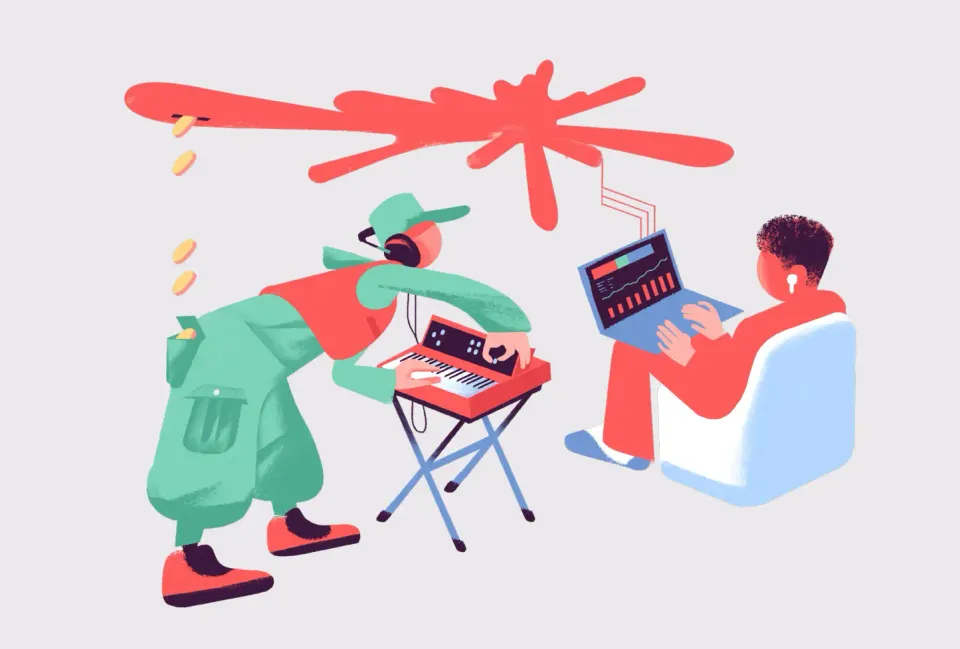
The music industry built its economic infrastructure around a single dimension of musical value: the transaction. Music as product — counted, copied, consumed. This logic powered an immense global industry. It is also blind to everything else music does.
Generative AI brings this reduction to its structural limit. When machines can produce unlimited music at near-zero cost, the transactional dimension alone can no longer sustain an industry or justify the participation of human creators. But AI simultaneously opens entirely new domains — vehicles, healthcare, robotics, architecture — where music functions not as product but as adaptive, context-responsive experience. These markets do not yet exist within the music economy. They could surpass it in size.
CORPUS is designed to build the infrastructure for this transition: a licensing and royalty protocol where contributions are valued not by consumption but by how they enrich a shared generative resource — and where contributing generates not only revenue but a lasting stake in the system itself.
Our white paper explains why existing rights systems cannot meet this challenge, how the CORPUS protocol addresses it, and what the emerging infrastructure looks like in practice.
What's new in the March 2026 revision
The December 2025 version described CORPUS primarily as a fairer licensing system. This revision reframes it as a response to a structural problem in the music economy — and addresses three areas that were deliberately kept open in the first version:
Dual currency design. Contributors receive ongoing royalties in conventional currency and CRPS (Corpus Participation Rights) — a permanent stake in the system their work builds. The two currencies are governed differently: the diversity component of the royalty score decays gradually over time; CRPS, once issued, do not expire.
Three-layer architecture. The protocol distinguishes an open layer (scoring methodology, audit framework, data standards), a controlled-access layer (raw audio never leaves CORPUS infrastructure — federated learning only), and a proprietary semantic pipeline (the source of commercial differentiation).
Phased governance. Governance begins with a scoring jury selected by sortition from the contributor base — not because it's the final structure, but because the most consequential decisions (what counts as quality, what counts as originality) must involve contributors from the start. Dual-track governance and a foundation-based structure follow as the system scales.
Download the PDF
Too long, didn't read?
Here are two AI-assisted takes — a summary and a critique. Make of that what you will.
NotebookLM explainer video
Explainer Video created by NotebookLM
Critical review
"CORPUS addresses a real structural problem with a sound core logic: input-side valuation, diversity incentives, and federated data protection genuinely differentiate it from both CMO-based approaches and buy-out models. The three-layer architecture has strong precedent in open-core software economics. Whether CORPUS transcends the role of a well-run licensing intermediary depends on whether its most ambitious mechanisms — the foundation structure, CRPS, and contributor governance — are actually implemented as described."
Generated by Claude (Anthropic), March 2026