CORPUS LIVE — Making a Digital Project Real
CORPUS LIVE made our digital project tangible. With musicians, discussions, and live performances, we showed what drives us: a real community, a serious commitment to music, and an infrastructure that embraces complexity. The evening marked the public start of a project built by people who care.
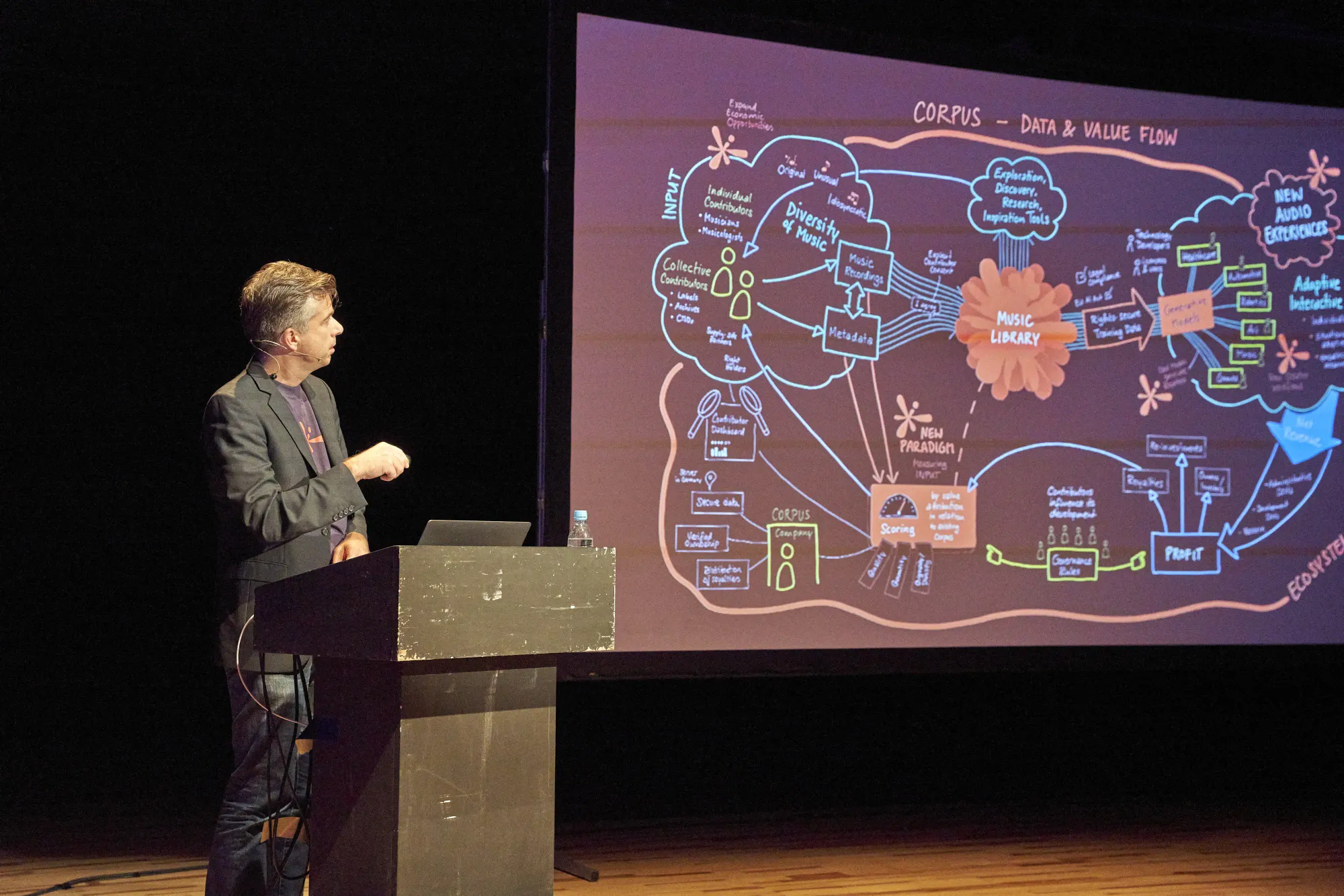
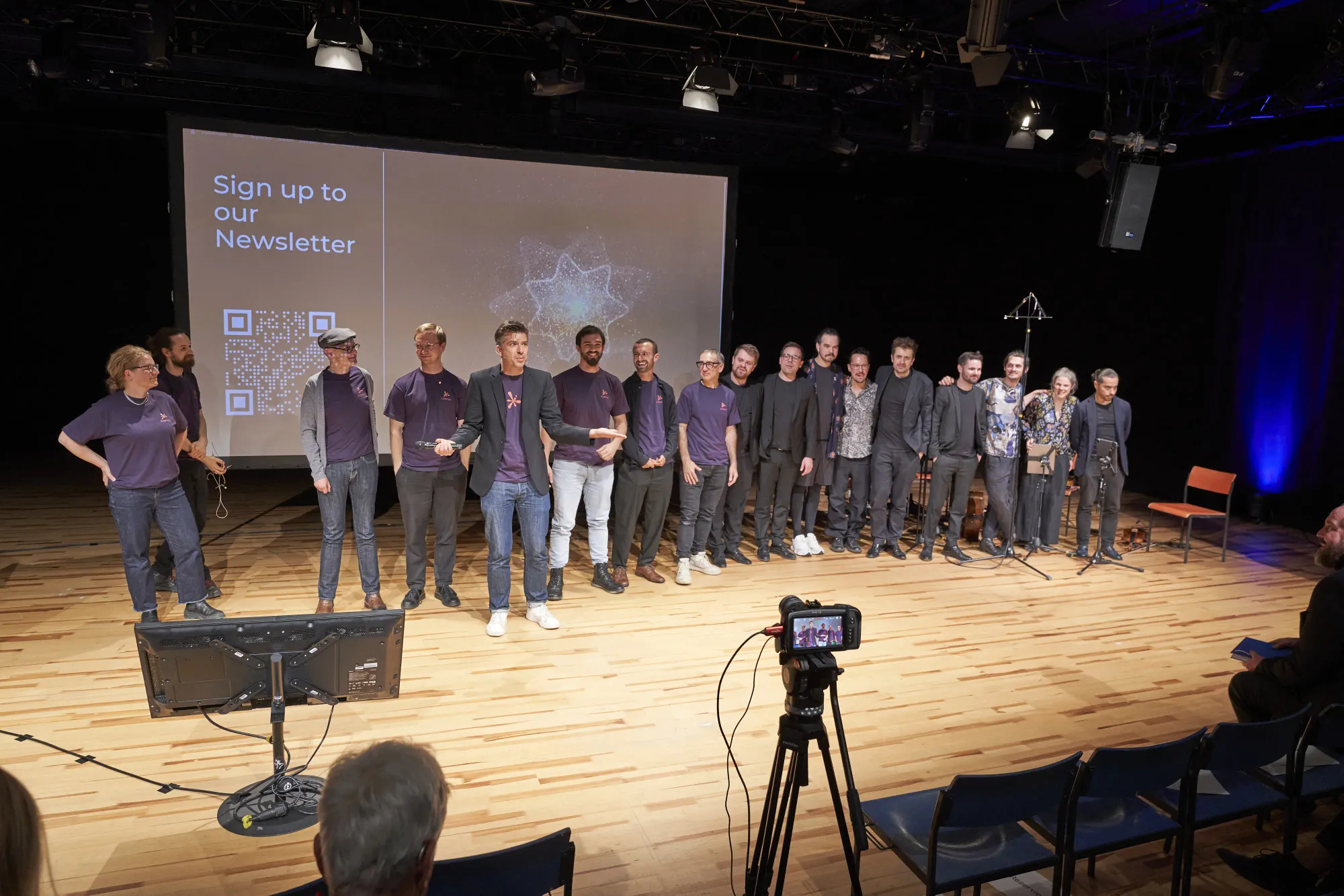
CORPUS founder Mathis Nitschke explaining the ecosystem. Photo: Ingolf Hatz
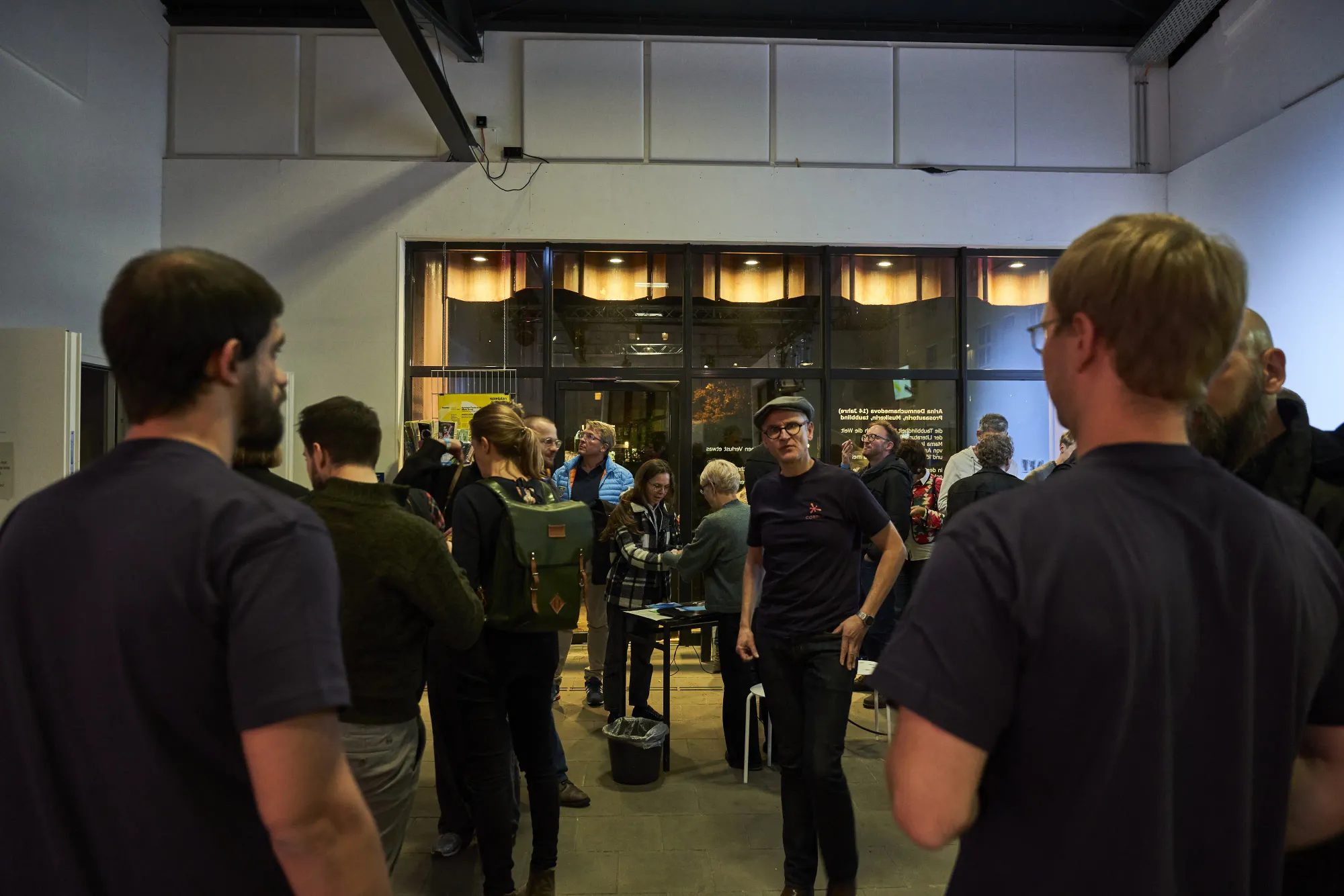
CORPUS is a digital initiative. A technical infrastructure, a protocol, a platform. Much of it is abstract and, in a literal sense, bodiless. That was exactly why we needed a moment in which all of this becomes tangible: an evening where music, people, and discussion show that CORPUS is not trapped in theory but is a real project, carried by real creators and a living musical practice. CORPUS LIVE on October 27, 2025 was that moment.
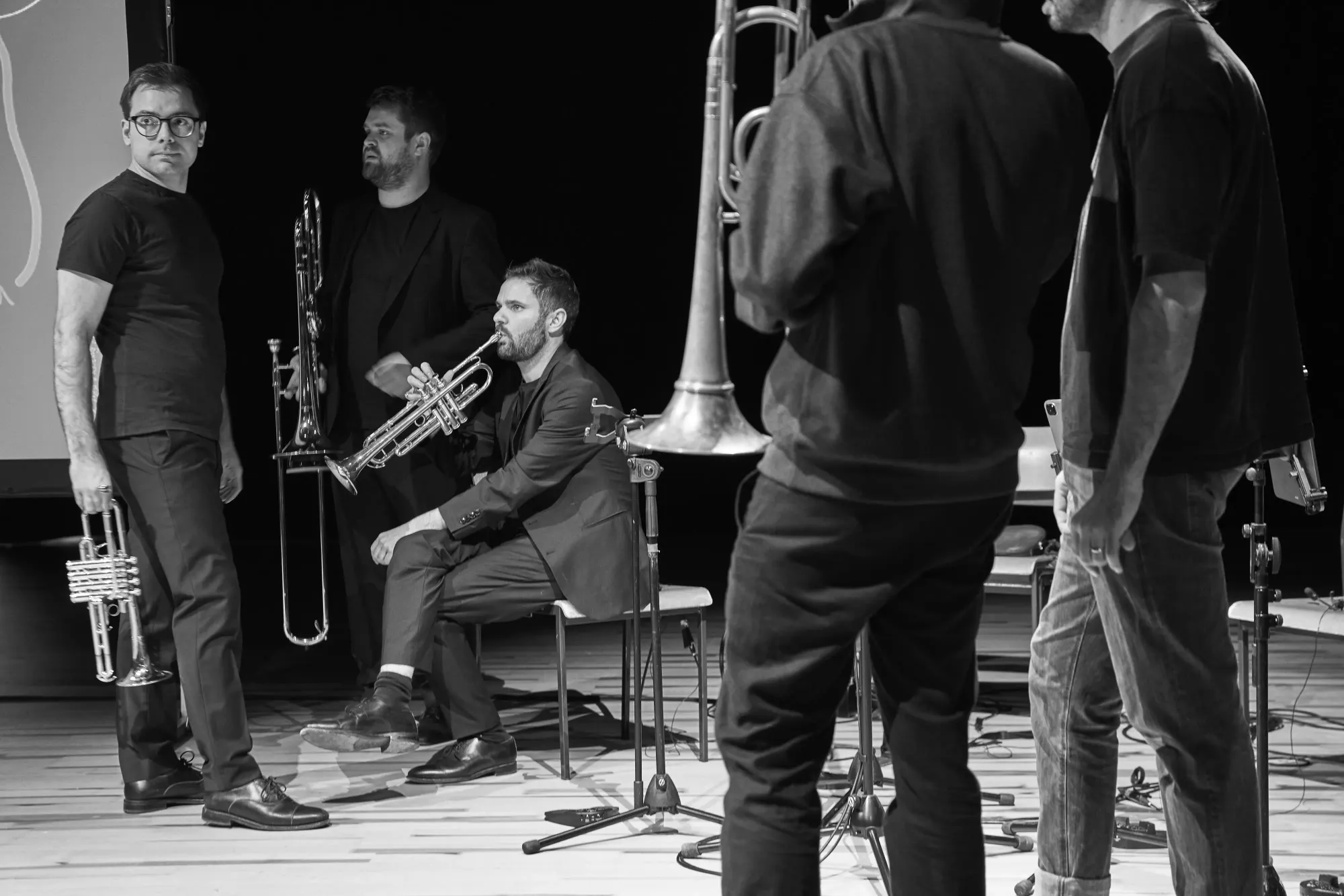
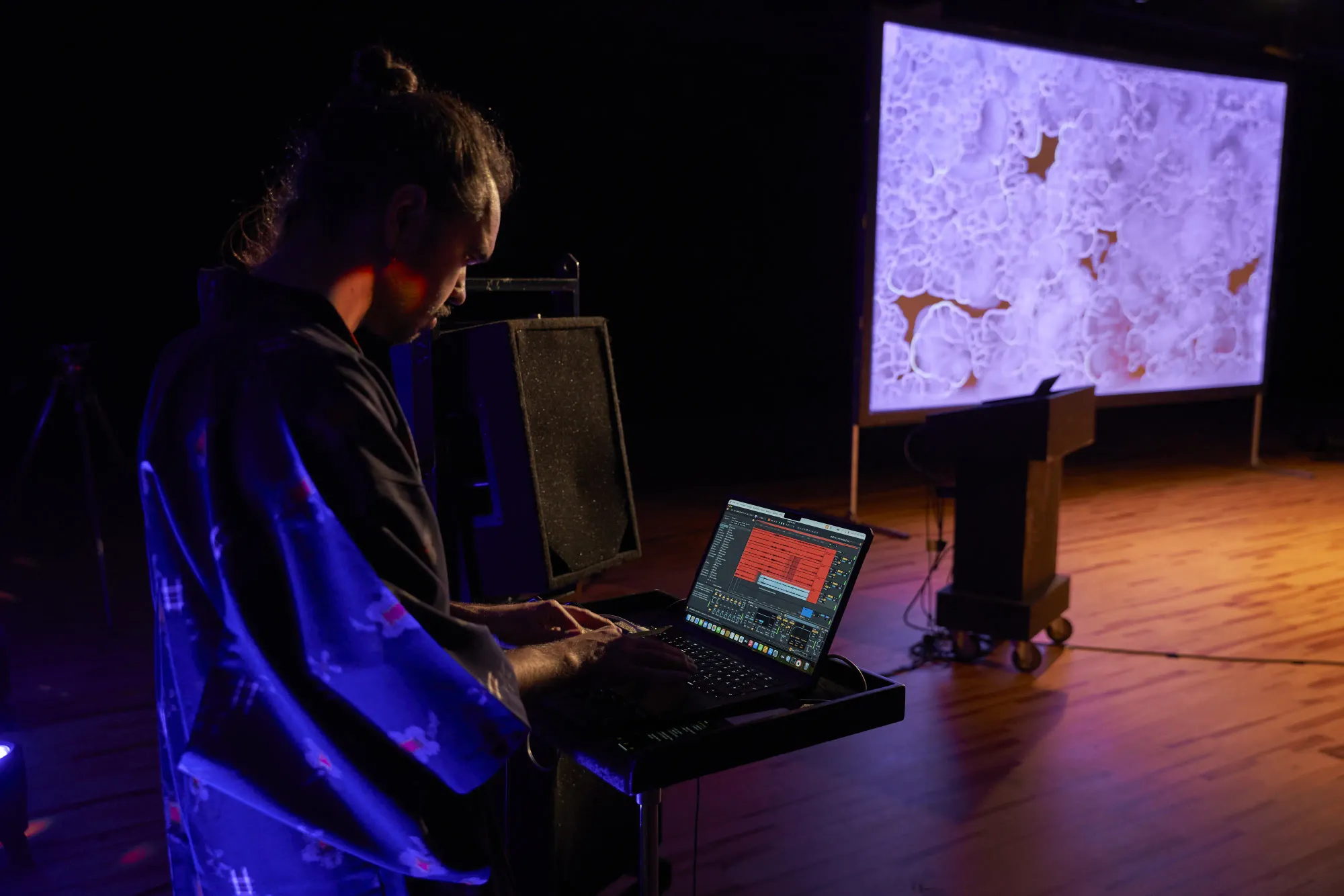
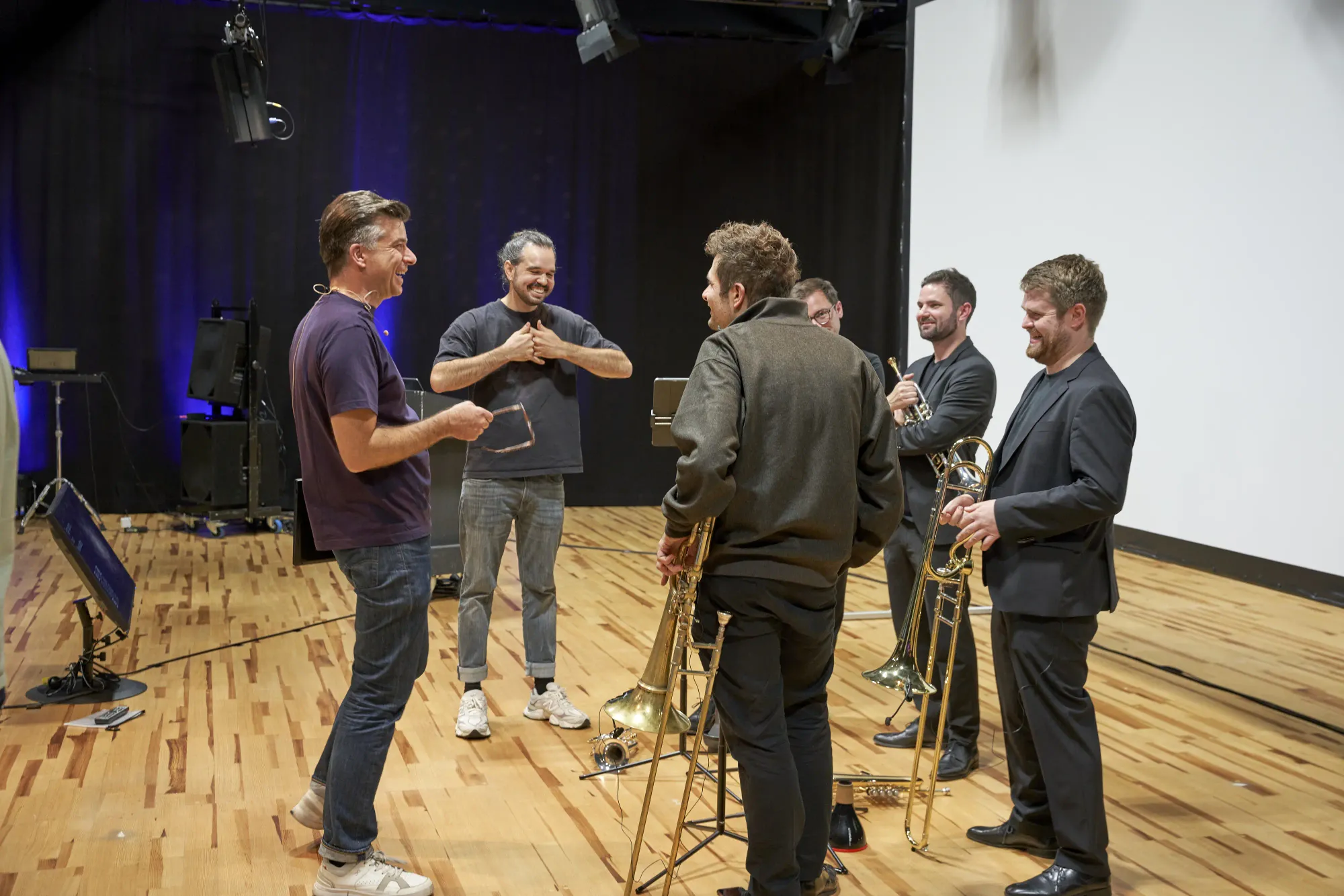
The event at Schwere Reiter was never planned as a pitch. We didn’t want to persuade anyone. We wanted to invite people in. To listen, to discuss, to explore. And we wanted to make it clear that this project does not emerge from a tech bubble but from people who take music seriously as art, craft, and cultural practice. That’s why we deliberately invited ensembles that embody a strong musical identity. Tetra Brass and Felix Kolb opened the evening with a performance blending acoustic ensemble playing and electronic textures. Later, the Paranormal String Quartet brought their unmistakable mix of groove, classical sound, and improvisation. This mattered to us: CORPUS is not a theoretical data-library exercise; it stands right in the middle of musical life.
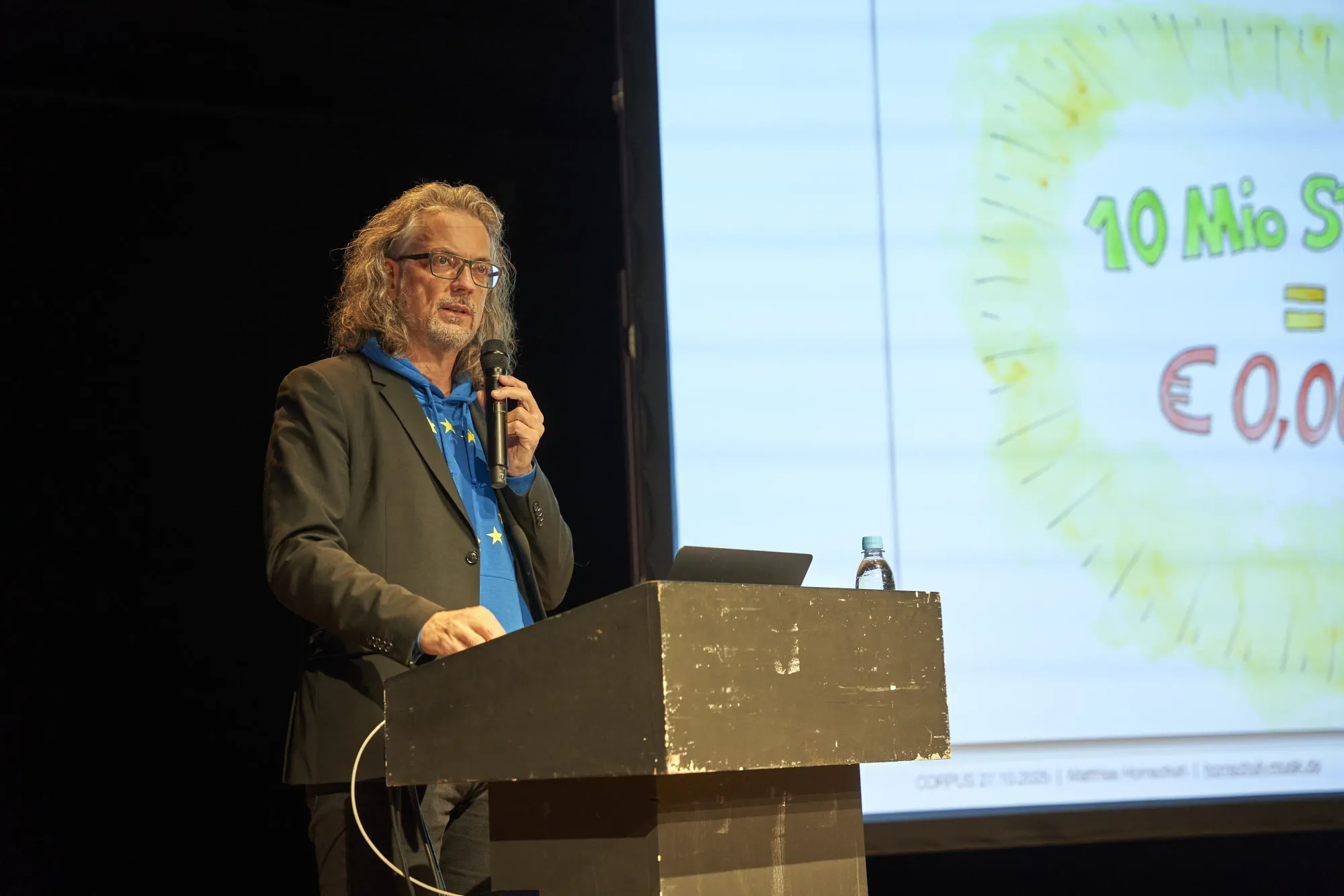
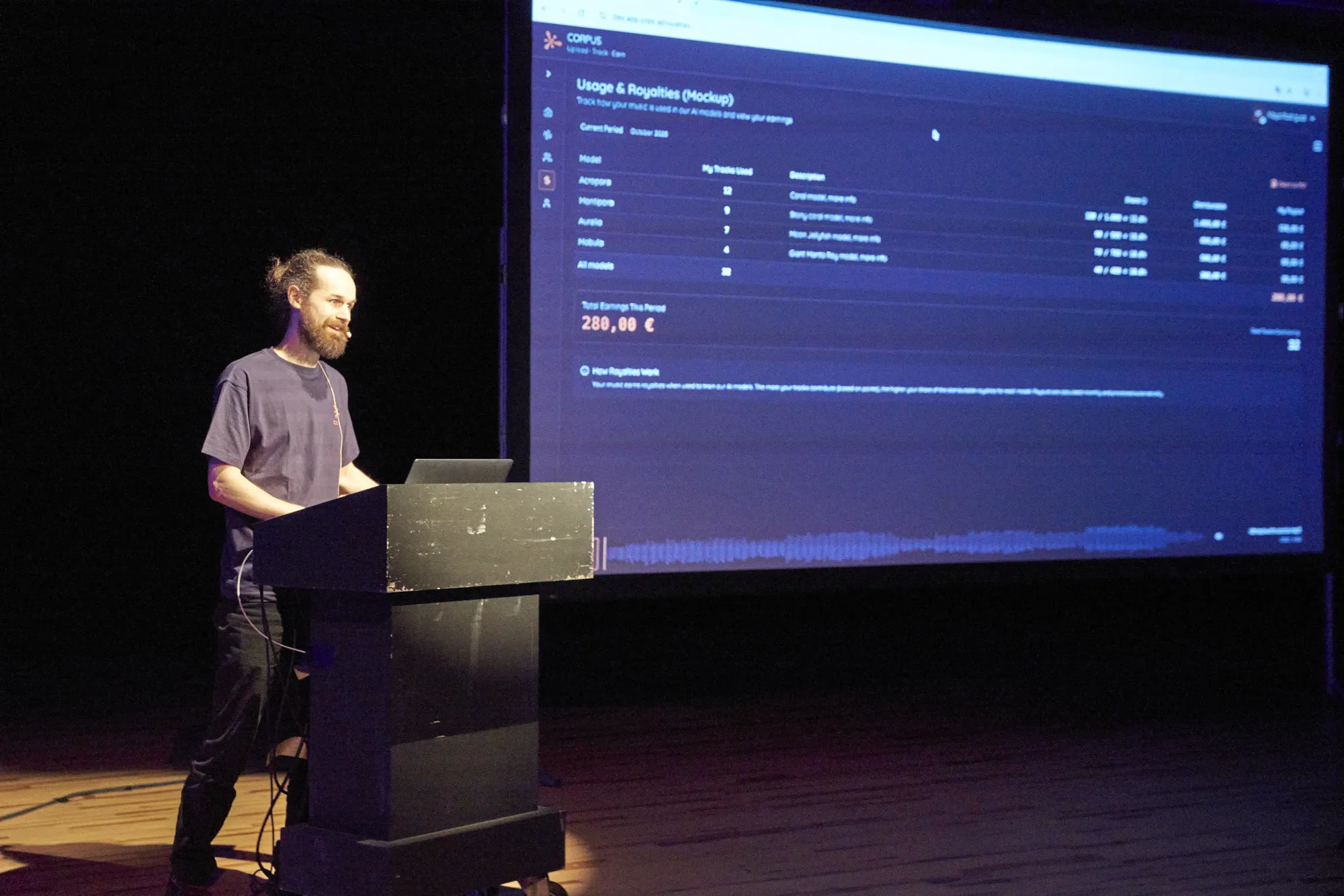
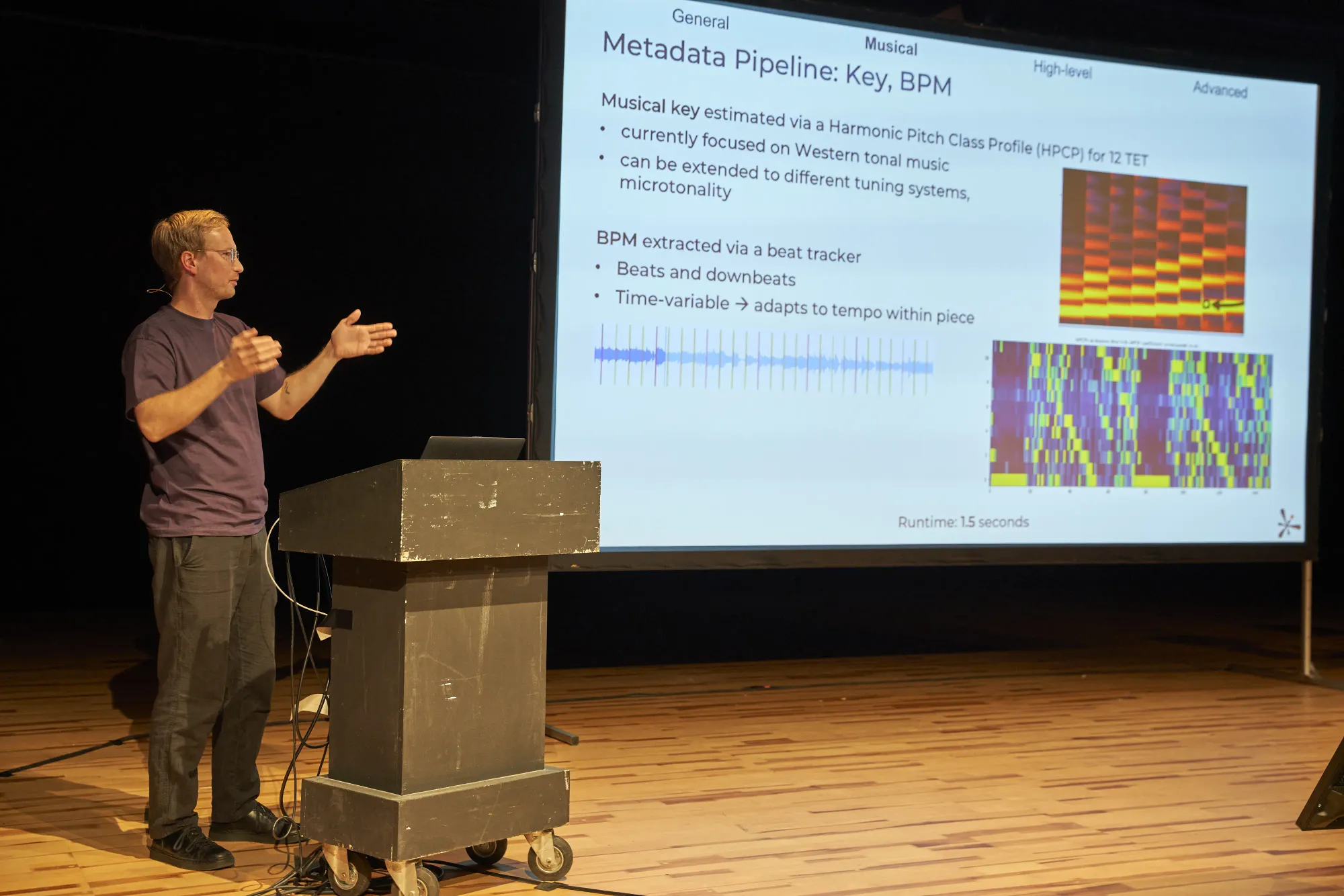
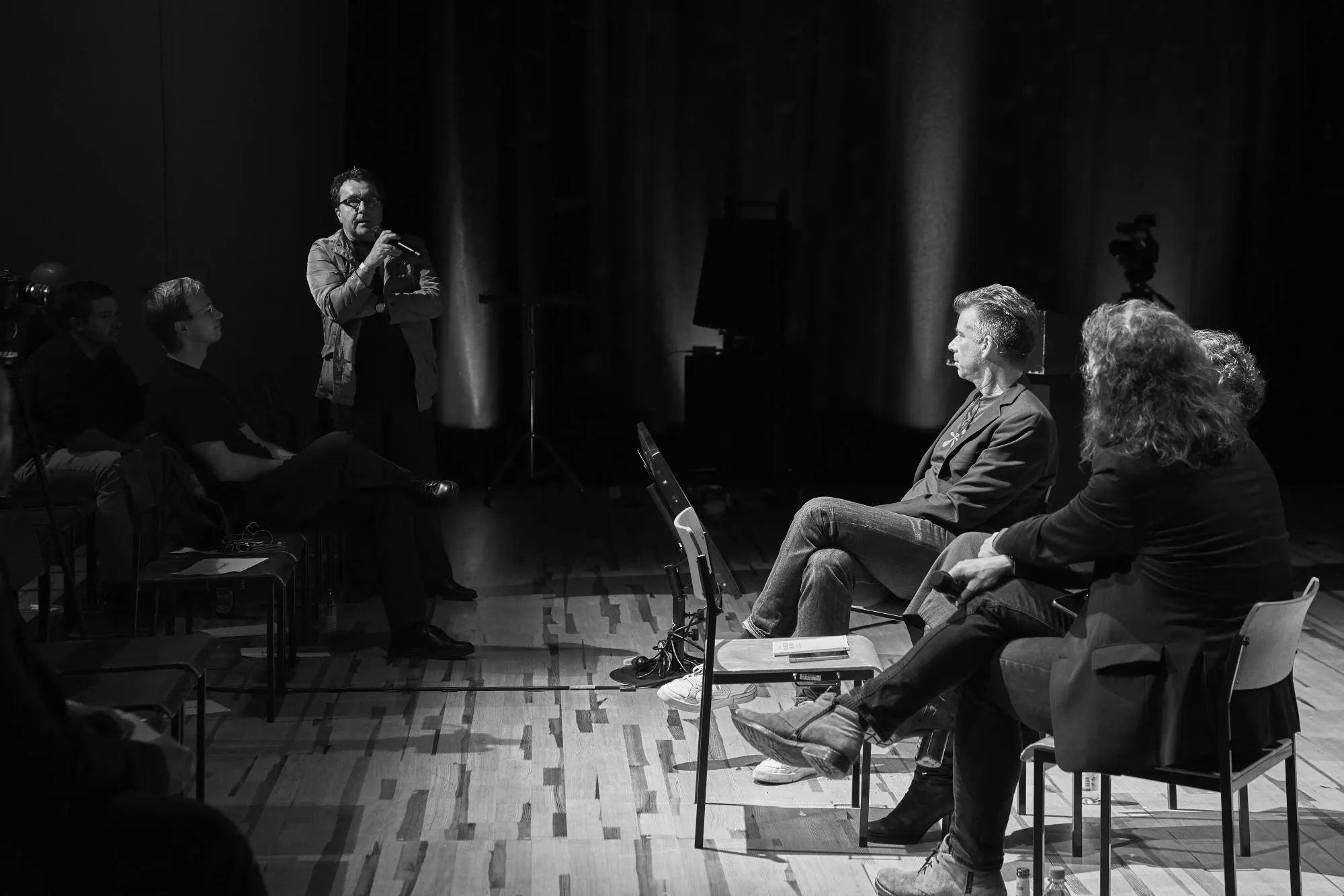
Between the performances, we dug into the messy part, the ideas and structures behind the project. In his keynote, Matthias Hornschuh (composer, GEMA board member, and spokesperson for the Initiative Urheberrecht) framed the evening’s core question. His subject: the structural asymmetries that have long made fair pay difficult for independent musicians, and how generative AI has arrived as an accelerant on a fire that was already burning. We followed with a live demo of the CORPUS Contribution App, opened the door to its AI-powered annotation pipeline, and explained why a new licensing model is needed if AI-based music creation isn’t supposed to stay trapped in old frameworks. We were open about the complexity. We didn’t pretend this could be reduced to simple answers.
Both the venue and the livestream filled up. For us, the evening was also a milestone, and perhaps a pragmatic thought played a role: putting an event on the calendar forces a digital project to become concrete. The deadline did its job.
What has stayed with us are responses like this one, from a GEMA employee in the audience:
“It was a very nice event. No staged sales show and without the usual hockey stick graphics. Instead, the creative musical process front and center — honest and credible. Thanks again for the invitation.”
If you want to get a sense of the atmosphere, the aftermovie at the top of this page captures it well in two minutes. And the full livestream is available below.
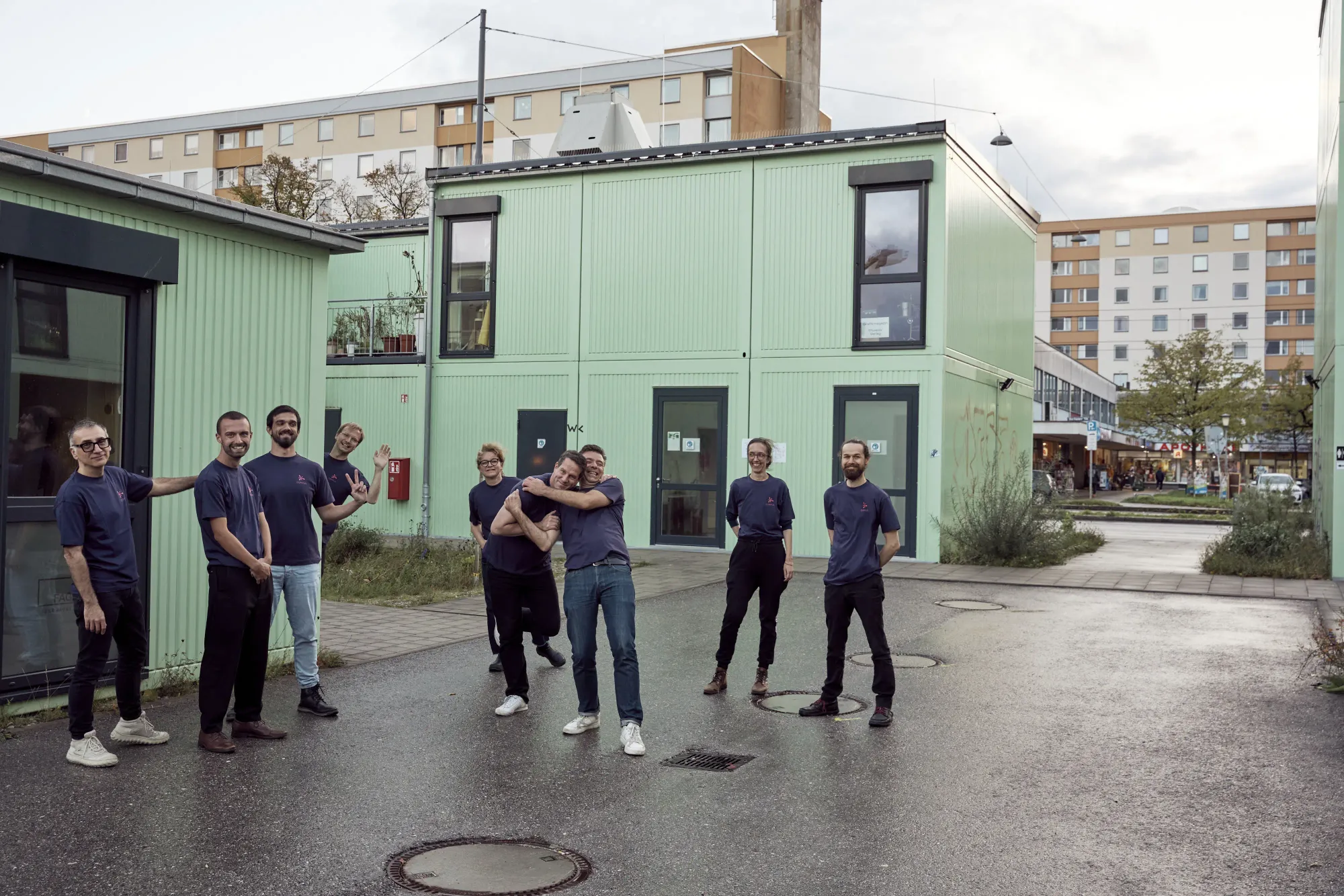
CORPUS LIVE was a beginning. A moment of coming together. A step that made visible what this is about: a project with real people behind it, treating music as the core, not the content, of what we are building.
Follow the CORPUS project as it takes shape.
Or subscribe via RSS feed — works in any reader.
Every Upload Is a Decision
Upload platforms make decisions — about what counts as music, who owns it, whether it is human. Most chose not to. CORPUS built the infrastructure for choosing differently.
Particles and Principles: The Aesthetic Logic of CORPUS
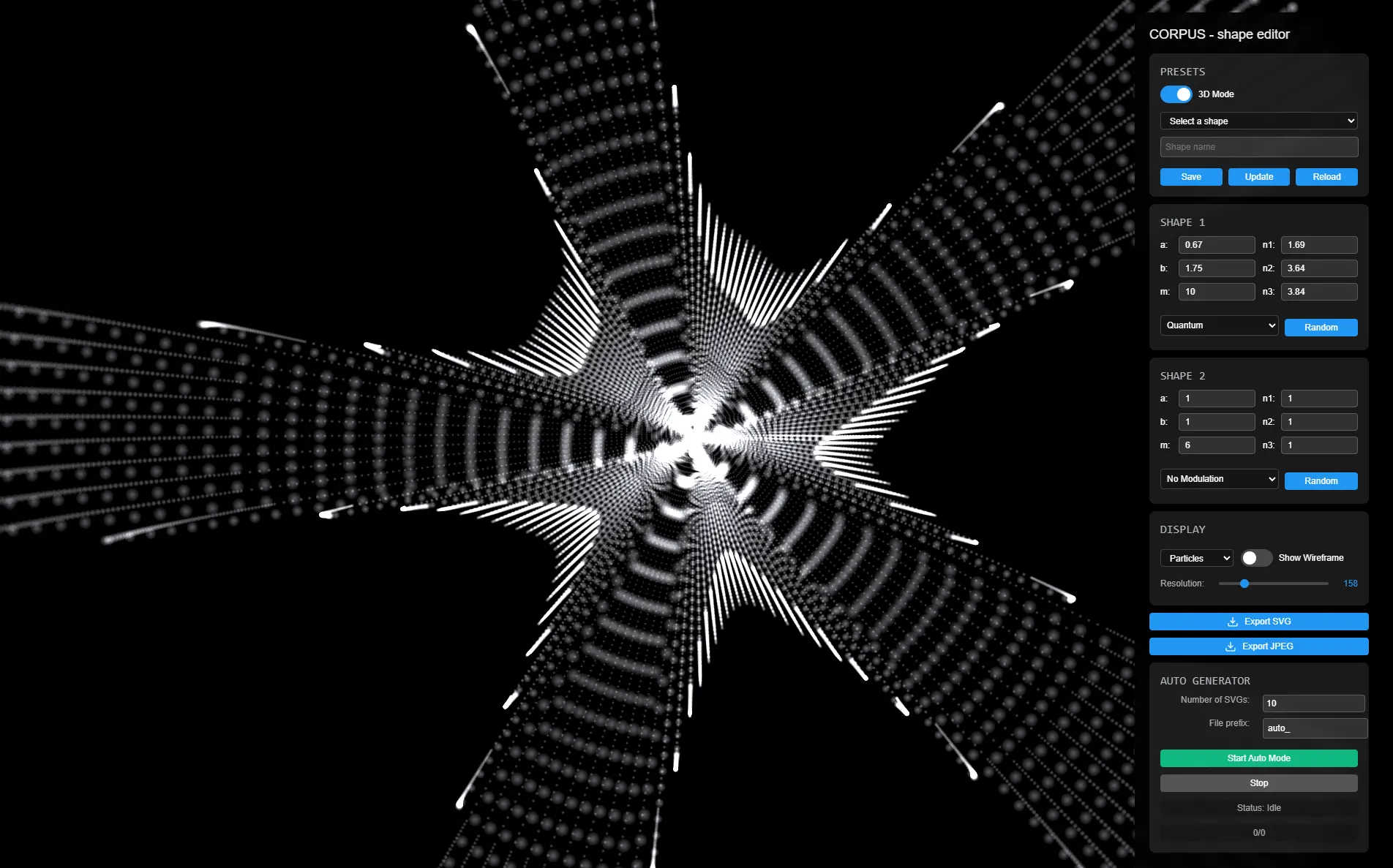
Inspired by nature and music, the CORPUS visualization on corpus.music shows data as a living system. CTO Lars Ullrich shares how algorithmic forms become visual storytelling—an evolving network where every contribution counts.
Why We Still Need to keep making Music in the Age of AI
AI tools can now create music at the click of a button — but does that mean we should stop making it ourselves? Composer Kasia Głowicka reminds us that the real magic of music isn’t just the finished track, but the messy, rewarding process of creating it.